
Nine Reasons Boilers Fail in Winter in the North East
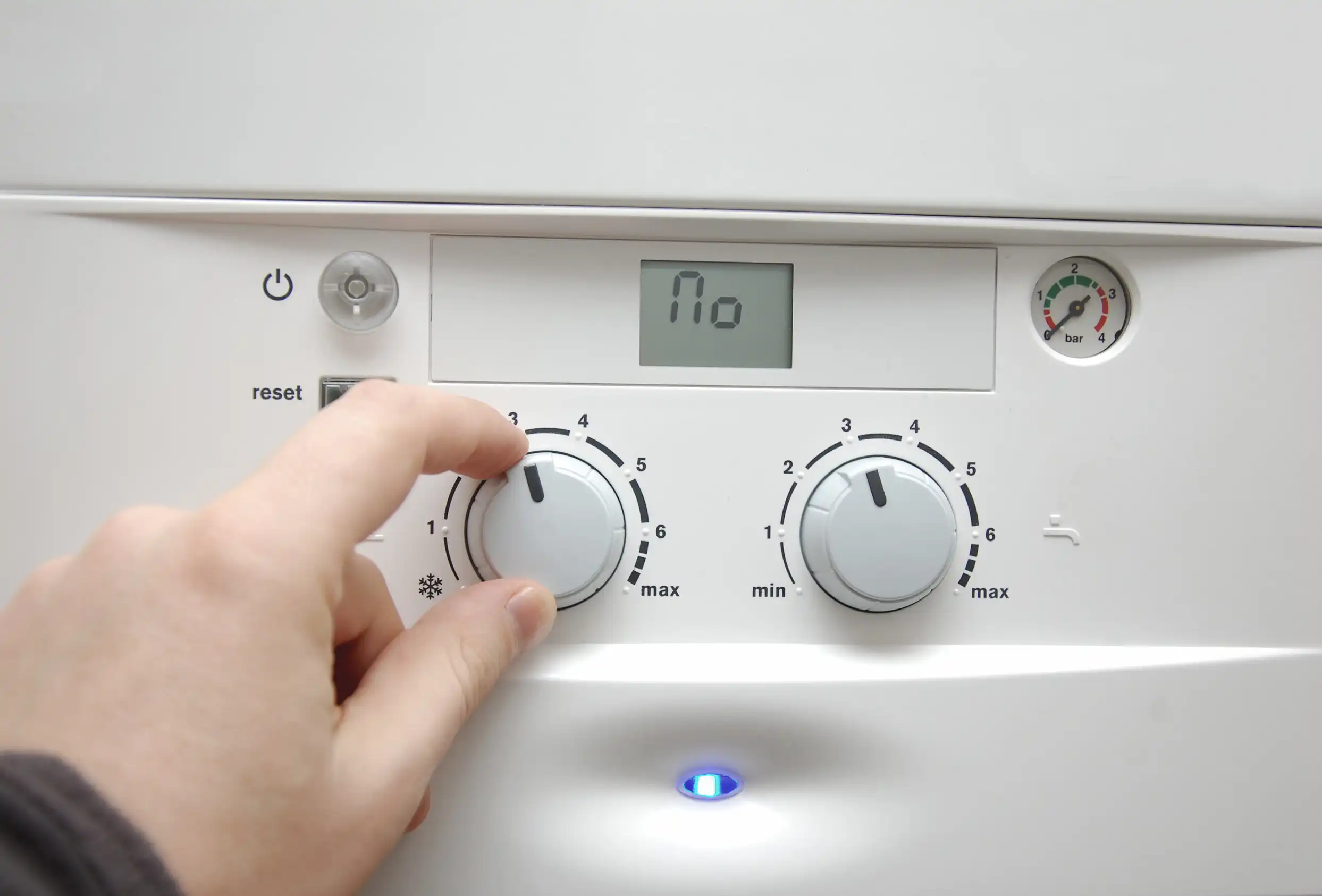
Boiler breakdowns are not random. Across the North East the same handful of faults come round every winter, usually in the same order, and the phone rings in predictable waves. Here are the nine, what causes each, and what actually prevents it.
1. The condensate pipe freezes
Far and away the number one. Every modern boiler produces acidic condensate that has to drain away, and where that pipe runs outside it freezes solid in the first hard frost. The boiler detects the blockage and shuts itself down, usually showing a lockout. People assume the boiler has died. It has not.
Thawing it gets you going again within the hour. The real fix is rerouting the condensate to an internal waste where the layout allows, or running it in the correct diameter properly insulated where it has to stay outside. Thin uninsulated overflow pipe on a north facing wall is asking for it.
2. Months of standing still, then full load overnight
Most heating systems do very little between May and October. Then one cold evening they go from nothing to running for hours. Anything that was marginal all summer fails under that load. This is why so many breakdowns cluster in the same fortnight rather than spreading through the season.
3. Sludge that was fine in summer
A system carrying magnetite will limp along in mild weather because it barely needs to work. Ask it to heat the whole house on a cold night and the poor circulation shows up immediately as cold radiators, a boiler cycling on and off, and in bad cases an overheat lockout. The sludge did not appear in November. It was there in July.
4. Pressure that has been creeping down since spring
If you have been topping the filling loop up every few weeks and thinking nothing of it, that is a leak, a failed expansion vessel or a pressure relief valve passing water outside. All three get worse, and all three tend to reach the point of failure when the system is under full load. Three different jobs at three different prices, which is why guessing at it is expensive.
5. The diverter valve, which only matters when you need both
On a combi, the diverter decides whether the boiler is heating your radiators or your hot water. In summer you almost only ask for hot water, so a failing diverter goes unnoticed. In winter you want both, and suddenly you have heating but no hot water, or hot water but no heating. It is a known part at a known price and it does not mean the boiler is finished.
6. The pump has seized after sitting idle
Pumps do not like sitting still for months. A pump that has not turned since spring can stick, and on an older system with a separate pump that is a common first cold snap failure. Sometimes it frees off, but a pump that has stuck once will stick again.
7. Weather gets at the flue
This is a coastal and exposed ground problem more than an inland one. Salt air corrodes flue terminals along the Sunderland and South Shields coast noticeably faster than two miles inland. High ground around Stanley, Copt Hill and the Durham villages gets wind that disturbs the air pressure the boiler relies on. The result is a boiler that lights and then locks out moments later, or a fan working harder than it should against a partly obstructed terminal.
8. Controls, including the boring ones
A surprising share of no heating calls are a wireless thermostat with a flat battery, a programmer that lost its schedule in a power cut, or a stat mounted somewhere that never gets cold enough to call for heat. Worth ruling out before anyone charges you to attend.
9. A missed service, which is how the other eight go undetected
Nearly everything above leaves a trace months before it strands you. Gas pressure drifting, hot water performance dropping, a fan drawing more current than it should, a condensate route that is obviously going to freeze. A proper service catches those in September for a known price. A breakdown in January costs more, takes longer, and happens at the worst possible time.
It is also the condition that keeps most manufacturer warranties valid, which is the part that catches people out when they finally do need a big part replaced.
The pattern
Numbers one, two and three account for most of what we are called to between the first frost and the new year. All three are preventable in autumn for a fraction of what they cost once the house is cold. That is not a sales line, it is just the order the calls come in.
Where to go next
If you want the preventable ones dealt with before the cold sets in, that is a boiler service, with local pages for Sunderland, Durham and Washington. If yours has already gone, our out of hours cover runs across the region, and the repair prices are published so you know before you ring.
Not sure we reach you? Call 0191 540 2051 and we will tell you in seconds.