
Microbore Pipework and Why Washington Boilers Block Up
Washington is unusual. It was designated a new town in 1964 and built out district by district, which means the housing did not accumulate gradually the way it does in an older town. It went up in phases. Concord, Sulgrave, Columbia, Biddick, Blackfell, Barmston, Usworth and Oxclose each have their own building period, and whole streets share an age, a layout and a way of being plumbed.
For a heating engineer that is genuinely useful information. Before we lift a floorboard we have a fair idea what is under it.
What microbore actually is
Microbore is small diameter pipe, typically 8mm or 10mm, run from a central manifold out to each radiator individually, rather than the 15mm pipe most people picture feeding radiators in a chain. It was popular through the 1970s and 1980s because it was fast to install, used less copper and was easy to run under floors.
It works. There is nothing inherently wrong with it and we do not rip it out as a matter of course. The problem is what happens to narrow pipe over forty years.
Why narrow pipe is less forgiving
Every sealed heating system slowly produces magnetite, the black iron oxide sludge that comes from steel radiators corroding from the inside. In 15mm pipe a fair amount of that can accumulate before flow is affected. In an 8mm leg, the same amount of debris is proportionally a much bigger obstruction.
So a system that would be merely sluggish in standard pipe becomes a radiator that never gets warm, or a run of radiators at the far end of the manifold that only heat when nothing else is calling. It is the same sludge. The pipe just has less room to tolerate it.
How to tell whether you have it
You do not need to lift floors. A few signs are reliable.
- Look at the pipes coming out of a radiator. If they are noticeably thinner than the standard 15mm you see elsewhere, that is microbore.
- Look in the airing cupboard or under the stairs for a manifold, a block with a row of small pipes coming off it.
- One or two radiators that have never worked properly, while the rest are fine, is a classic single blocked leg rather than a boiler fault.
- Radiators cold at the bottom and warm at the top is sludge. Cold at the top and warm at the bottom is air, which is a different and much simpler problem.
Why it matters most when you are buying a new boiler
This is the part that costs people money. A modern condensing boiler has a heat exchanger with far narrower waterways than whatever came out. Debris that an old cast iron boiler pushed around for twenty years without complaint will block a new one inside a season.
Which is why nearly every manufacturer now makes cleaning the system in line with BS 7593 and fitting a filter a condition of the warranty. A cheap installation that skips the flush is not cheaper. It has moved the cost to later and taken your warranty with it.
On a microbore system that check matters more, not less, because the consequences of getting it wrong are worse.
Flush, or replace the pipework?
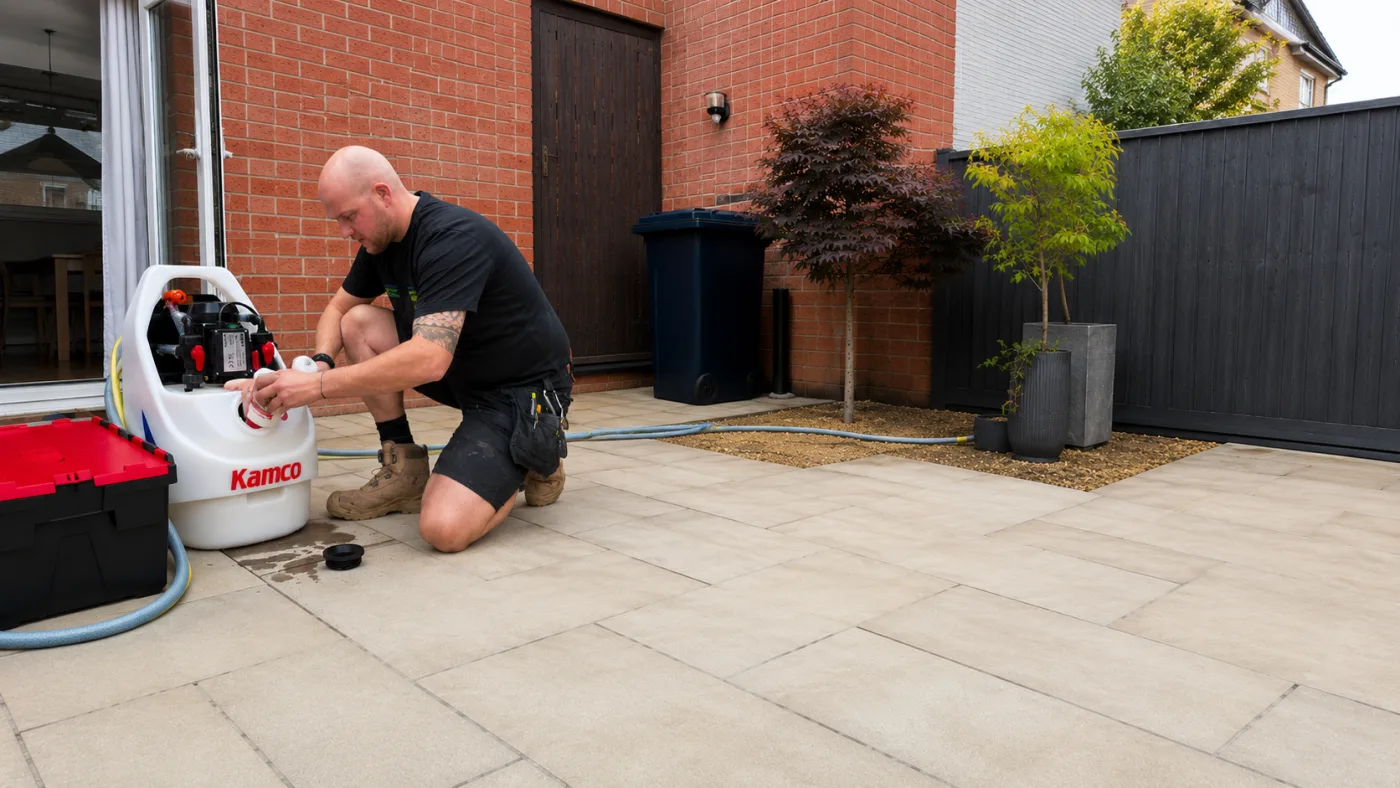
Most of the time, a proper power flush with the right chemicals clears microbore perfectly well, and individual stubborn legs can be cleared separately. Replacing microbore throughout a house is a big and disruptive job and it is very rarely the right first answer.
The honest position is that we check the state of the system water and the flow and return temperatures before quoting, and tell you which of the two you are looking at. What we will not do is quote a new boiler onto a system we have not looked at, because that is how people end up with a warranty claim refused.
The newer estates
At Teal Farm, Biddick Woods and the more recent developments this is much less of an issue, because the pipework is standard and newer. What those properties tend to have instead is an original builder fitted boiler now old enough that its first warranty has expired and parts are getting harder to justify. Different problem, usually a much simpler job.
Where to go next
If radiators are cold at the bottom or one has never worked, that is a system problem rather than a boiler problem. See power flushing in Washington and boiler repair in Washington. If you are weighing up a replacement, the new boiler page for Washington explains what we check before quoting, and annual servicing is what keeps the warranty standing afterwards.
Not sure we reach you? Call 0191 540 2051 and we will tell you in seconds.